
At Macronimous, we have a professional Ecommerce Development Process for your E-commerce site building. At our offshore Ecommerce development center in India, We take care of initial scope analysis till continuous search engine optimization of your Ecommerce store.
You can see the process involved in each phase of the Ecommerce store Development Process and the deliverables:
- Scoping and Requirements building
- Planning and Analysis
- UI Design
- Construction and Testing
- Deployment
- Maintenance and SEO
Stage 1: Scoping and Requirements
Process
- User requests for a quote
- The Supplier does a feasibility study for the project
- On receiving a positive result, proceeds with the quote
- On User acceptance for the quote, an invoice is raised by the supplier
- Agreement terms are prepared and negotiations are done
- Once Negotiations are finalized the initial payment is received or as per the norms in the proposal
- Review the current stage for benefits and the project moves to the next phase
Deliverables
- Request for Quote
- Feasibility Study Analysis Report
- Project Proposal Document
- Invoice
- Statement of Work
- Payment Order – Initial
- Stage Review Report
Stage 2: Planning and Analysis
Process
- Identify the right technology platform (ASP.NET/PHP/Java)
- Assessment in terms of the feasibility readiness for Opensource or Custom made
- Find the right Opensource E-commerce platform (Magento, Opencart, ASPDNSF , PrestaShop, OSCommerce, Zencart, aspxcommerce etc)
- Use the best practice from previous projects[ from the Knowledge Repository]
- Requirements gathering in the form of use cases
- Risk Mitigation strategies
- Resource Allocation & Project Schedule preparation and intimation to the user
- Plan for the Configuration Management Activities
- Setting the Tolerance limits for Cost, Time, Scope, Quality, and Risks
- Review the current phase and proceed to the next
Deliverables
- Project Plan
- Configuration Management Plan
- Lessons Log
- Risk Log
- Requirements Document
- Stage Review Report
Stage 3: UI Design
Process
- Draft a High Level and Low-Level Design System
- Include a Wire Frame Diagram
- Set up a Coding Standard
- Set up the Development Environment
- Propose a Test Plan / Test Strategy
- Review and plan for the next phase
Deliverables
- High-Level Design Document
- Low-Level Design Document
- PHP Coding Standards
- Dot Net Coding Standards
- Design Coding Standards
- Java Coding Standards
- Test Plan
- Wire Frames
- Stage Review Report
Stage 4: Construction and Testing
Process
- Setup a Test Environment
- Create Integration and System Level Test cases
- Create Home Page Designs
- Use CCB for Managing changes and obtain approval for additional
- Maintain versioning systems
- Creation of Inner Page Designs and conversion of HTML
- User to provide any custom modules and extensions or purchase the theme from the respective sites.
- Complete catalog building with necessary photo and graphics
- Integration of the Themes / Designs with the open source tool
- UI and UX consulting and complete template designing
- Review the current plan for benefits and proceed to the development phase
- Third party tools integrations such as payment gateways, Shipping solutions etc
- Code Walk-through
- Unit Testing
- Execute test cases and perform the Integration and System Testing
- Record the execution report and plan for closure
- QA gives sign-off to move to production
- Obtain payment by phase wise
Deliverables
- Tested Code
- Change Request Form
- Created / Executed Test case document
- Defect Logs
- Reviews
- Payment Order – Follow-up
Stage 5: Deployment
Process
- Create a build request for an environment migration
- Fill in the Pre-Launch Checklist
- Deploy the code to live and perform an Operational Readiness Test
- Inform to the user on successful tests
- If unsuccessful enhance the code and then deploy
- Cloud server (AWS and Azure) setup and DB optimization (if required)
Deliverables
- Build Request Form
- Final Build
- Pre-Launch Checklist
- ORT Test Reports
Stage 6: Maintenance and SEO
Process
- Error Handling and Debugging
- Complete store maintenance and SEO readiness setup
- Adherence to SEO Standards – Organic
- Link Promotion
- Perform Performance Monitoring at repetitive intervals
- Increase Traffic to websites
- Continuous product marketing with Social Media and conversion tracking
Deliverables
- Performance Monitoring Report
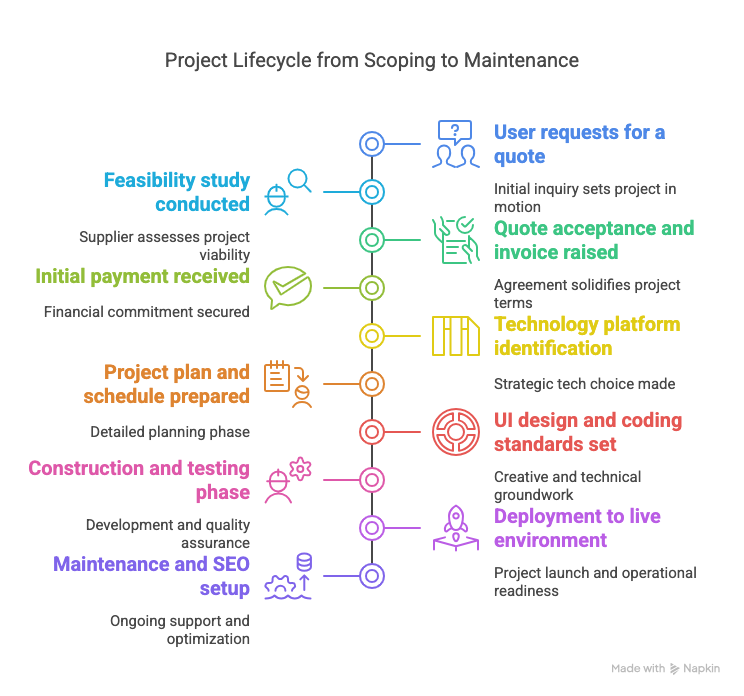
Here is a simple flow diagram that explains the entire process that you will go through with your ECommerce development with us.
To learn more about our Outsource E-commerce website development services or write us for further assistance on Price, Promotion strategy, contract, etc., please feel free to fill out form and submit it to us. Or contact us by Email.


