
3 best ways to measure ROI in SEO
January 24, 2017 0 commentsHowever, the reality is, there have to be some returns and for sure – profitable, which is keeping the SEO industry alive. But, let us dive into – why this vagueness – and fish out the clarity that SEO professionals need to have, to explain to their clients.
There are 2 basic things that we need to keep in mind as we try to wrestle with this!
They are What are the Results of SEO efforts? And How can you price them (SEO efforts) based on returns? Let us check them out.
A. What are the results of SEO efforts?
Without figuring this out, we cannot even begin. We have put below the funnel, which captures how this unravels.
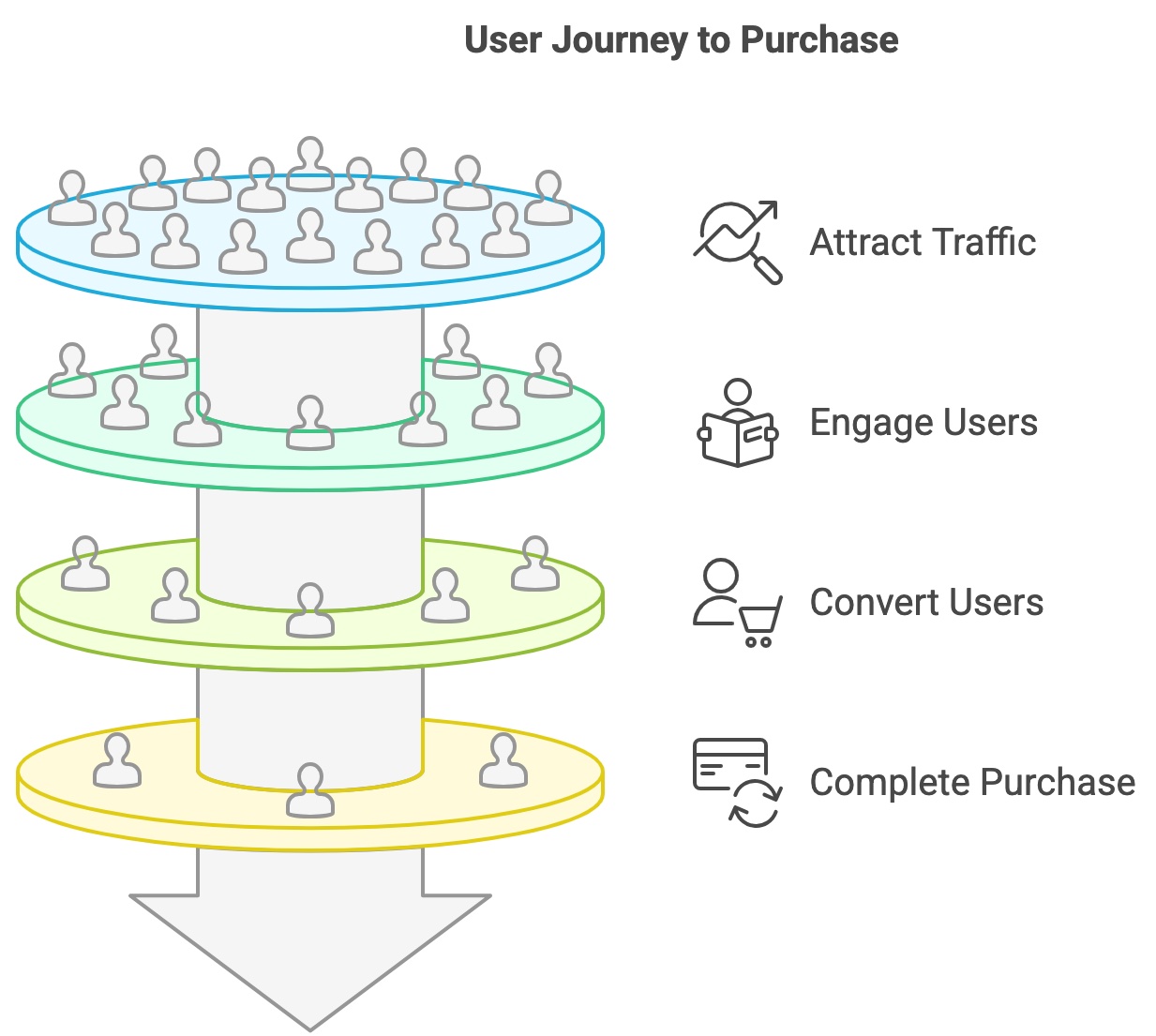
1. Attracts Traffic, resulting in an Increase in Traffic: The web world is full of users. But what is it that makes the user come to your site? Here comes the role of SEO, who optimizes your site to be visible to the users – not ‘any’ user, but ‘potential’ users. Any SEO professional knows – this is the toughest part, and it takes loads and loads of work – and no shortcuts work! Not only that, if you set this up well, then almost half the work is done.
2. User Engagement: Here comes the next step, where you engage the user with Quality Content. We have a detailed blog on User Engagement and how to improve the same.
3. User Conversion: Once the user is engaged well, the chances of conversion begins. From a maze of decision-making factors, a certain percentage of users truly move on to the decision of making a purchase
4. Actual Purchase: The final part of moving the user from the point of conversion to actual purchase is such an important factor that, appropriate functionality and features need to be provided for success.
If you have observed, the journey of a user beginning from attracting to a certain website to the actual purchase is pretty much an SEO’s (if he is a good one) turf.
B. How can you price them (SEO efforts) based on returns?
Now let us talk about pricing the SEO efforts based on the returns. The price tag that comes with hiring an SEO team is usually very clear. Most of them have some criteria. Now, using Google Analytics or similar tools, you will be able to see actual data on visitors and the journey of the visitor to each of these to a certain extent. Putting a monetary value for the user moving from one stage to another would help you to come up with the returns. This would help you to figure out whether your SEO efforts are a liability or an asset.
However, this method is a very simplistic one and the “actual” ROI cannot be evaluated per se. Now let us see some facts involved in measuring the actual ROI.
Identifying the actual ROI – Some factors:
This is actually a tricky game!
Yes, The actual ROI is a tricky game to put one’s hand on. As a simple example, let us consider the people who visit the website and gather the information and then walk into the shop and does a purchase. Some would do a purchase at the shop physically based on the information from someone else who did an online purchase. There are many such cases where the Online and Offline segregation is almost difficult. But in the case of online shopping portals, we can have a better evaluation. However, these are information which may not be available with the SEOs and hence would find it difficult to do an honest evaluation.
- Incoming Traffic Measurement: The incoming traffic is nothing but the marketing cost. To see the effect of the SEO efforts that have been put in, the traffic before and after SEO implementation needs to be compared. Also, in the upcoming months, a certain cost needs to put for this.
- No of Users Visiting a Page: A particular value in money can be associated when the users reach the ‘Contact Us’ page or ‘Query page’ or ‘Get Quote’ page. This would be another measure of ROI.
- Savings on Paid Ads: Money saved is money earned. The keyword for which the users have visited organically versus the price that would have been paid if the visitors came in through paid ads (PPC) for the same keywords can be evaluated. A comparison of the SEO team payment versus this will show the money saved (or lost)by engaging the SEO professionals/team. However, to do PPC work you will again require a team, and they also need to be paid. Hence, unless the SEO team is doing things seriously wrong, you will mostly see money saved than lost.
As you would have figured out, ROI surely can be measured but requires an honest and unbiased approach from both the SEO professionals and the business owners. Since we are business owners, who are SEO professionals, we are able to evaluate the SEO efforts in a seamless way and thereby figure out the ROI. If you are hiring an SEO agency, the best way to measure the return on your investment is working with them closely. It naturally becomes a collaborative effort.
For years, we have been helping our clients to know what they earn out of their SEO efforts with us, showing them the proof of ROI in SEO has always been a challenging but interesting job. We have been kept writing about ROI. Check our past articles on how we can measure ROI using Google Analytics, ROI basics
We would be more than happy to journey with you in your SEO efforts. Let us know your queries in [email protected]
Related Posts
-
 March 6, 2017
User Engagement is still a strong factor in SEO
Being a veteran in SEO, we have seen the changes in the SEO landscape over the years. What was once important faded out and what was unheard of became important. User Engagement is one such factor for an SEO friendly website. But, why did this become such an important factor
Best Practices, Search Engine Optimization, SEO, UX UI0 comments -
 February 25, 2016
Top 3 reasons to host your E-commerce website on AWS VPC
Top 3 reasons to host your E-commerce website on AWS VPC Amazon Web Services Virtual Private Cloud (AWS VPC) allows us to launch cloud resources into a virtual network that we define. This virtual network similar to a traditional network gives the benefits of using the highly scalable cloud infrastructure
