
GEO vs. Traditional SEO: Key Differences and How to Adapt
April 15, 2025 0 comments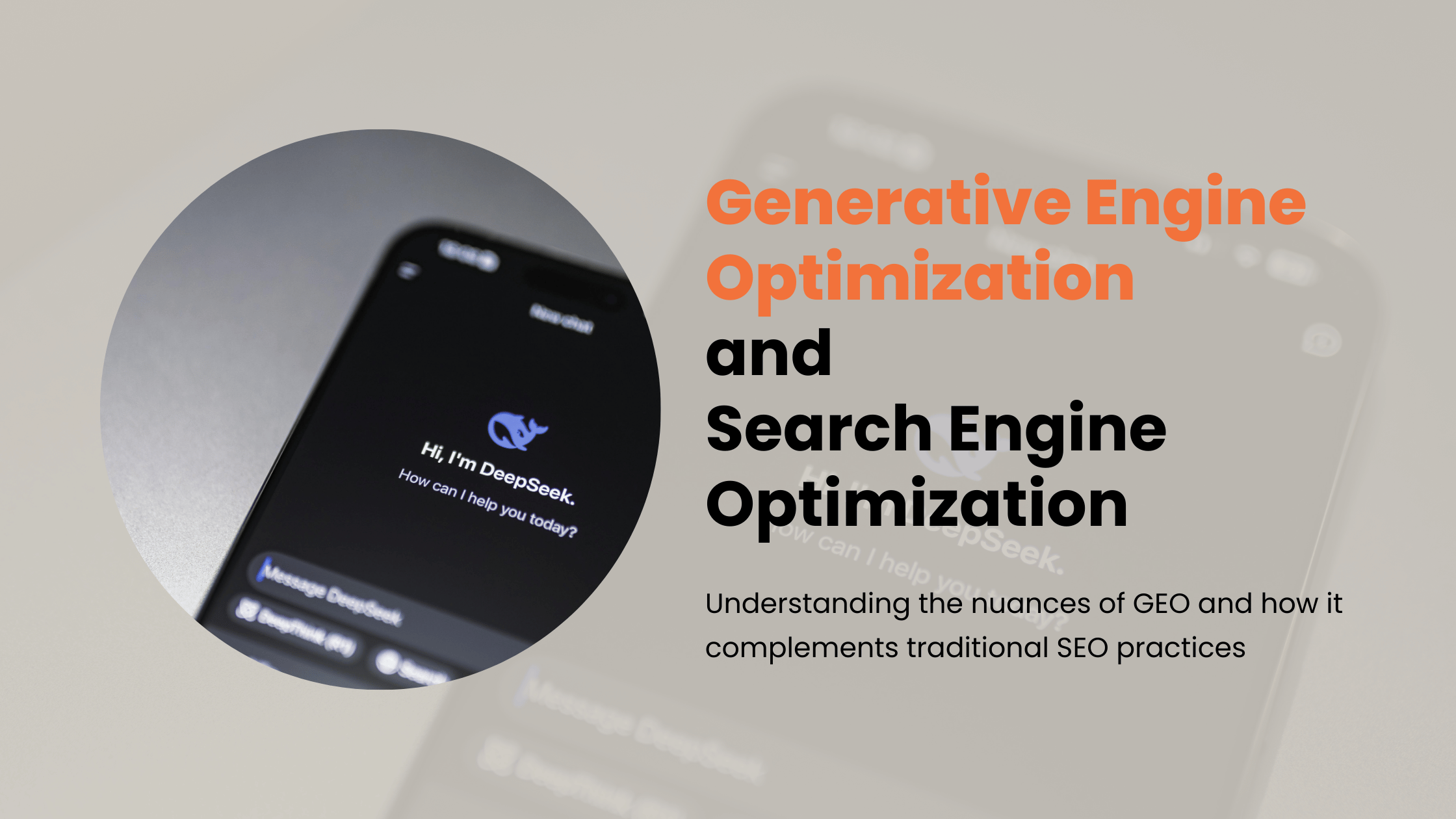
The blog title says GEO vs SEO; But it would be more as GEO and SEO. The digital marketing trends – with Google, are constantly changing. Now with the rise of AI-powered search experiences, a new player has entered the field: Generative Engine Optimization (GEO). While traditional Search Engine Optimization (SEO) still remains crucial, understanding the nuances of GEO and how it complements traditional SEO practices is essential for businesses to thrive. Let us learn some basics of GEO here.
What is Traditional SEO?
Traditional SEO focuses on optimizing website content and structure to rank higher in search engine results pages (SERPs) for specific keywords. It involves:
- Keyword research: Identifying relevant keywords that users search for.
- On-page optimization: Optimizing website content, meta descriptions, and titles for target keywords.
- Off-page optimization: Building backlinks and enhancing website authority.
- Technical SEO: Ensuring website crawlability (how easy your site is to make bots to crawl), speed, and mobile-friendliness.
What is GEO (Generative Engine Optimization)?
GEO addresses the shift towards AI-powered search experiences, where search engines provide direct answers and summaries instead of just links. It emphasizes:
- Entity optimization: Focusing on the meaning and relationships between entities (people, places, things) rather than just keywords becomes important.
- Knowledge graph optimization: Ensuring accurate and comprehensive information is available in knowledge graphs. (See here: how knowledge graph works).
- Structured data: Using schema markup to provide search engines with context and meaning.
- E-E-A-T (Experience, Expertise, Authoritativeness, Trustworthiness): Building content that demonstrates these principles, which are crucial for AI-driven results.
- Prompt Engineering: Understanding how users will ask questions in a conversational format, and optimizing for those queries.
Key Differences Between GEO and Traditional SEO:
| Feature | Traditional SEO | GEO |
| Focus | Keywords and rankings | Entities, knowledge graphs, and direct answers |
| Content | Keyword-rich articles and pages | Comprehensive, accurate, and contextually relevant information |
| Optimization | On-page, off-page, technical | Entity optimization, structured data, E-E-A-T, and prompt engineering |
| Search Results | List of links | Direct answers, summaries, and knowledge panels |
| User
interaction |
Clicks and page views | Conversational and direct information consumption |
They Are Not Mutually Exclusive:
It’s crucial to understand that GEO and traditional SEO are not competing strategies. They work together. Traditional SEO provides the foundation by ensuring your website is crawlable, relevant, and authoritative. GEO enhances this by optimizing your content for AI-driven search experiences.
How to Adapt Your Strategy:
- Embrace Entity Optimization:
- Focus on the meaning behind your content.
- Identify and optimize for relevant entities in your niche.
- Build content that explores the relationships between entities.
- Leverage Structured Data:
- Use schema markup to provide search engines with context.
- Ensure your website’s data is easily understood by AI.
- Utilize schema that is relevant to your business type.
- Prioritize E-E-A-T:
- Create high-quality, informative, and trustworthy content.
- Showcase your expertise and experience.
- Build a strong reputation and authority in your field.
- Optimize for Knowledge Graphs:
- Ensure your business information is accurate and consistent across platforms.
- Claim and optimize your Google Business Profile.
- Contribute to relevant knowledge bases.
- Understand Conversational Search:
- Anticipate how users will ask questions in natural language.
- Optimize your content for long-tail keywords and question-based queries.
- Practice prompt engineering, to understand how to best interact with AI systems.
- Maintain Traditional SEO Practices:
- Continue to perform keyword research and on-page optimization.
- Build high-quality backlinks and improve website authority.
- Ensure your website is technically sound.
- Adapt to AI driven content creation:
- Understand how AI is being used to generate content.
- Learn how to use AI tools to assist in content creation, while ensuring the content aligns with E-E-A-T standards.
Conclusion:
The shift towards AI-powered search experiences necessitates a holistic approach to SEO. By combining the strengths of traditional SEO with the principles of GEO, businesses can ensure their content is discoverable and relevant in the evolving digital landscape. Embrace the change, adapt your strategies, and position your business for success in the age of AI.
Related Posts
-
 October 5, 2019
Improve SEO using Chrome User Experience Reports – CrUX
Image Credit: Google Developers (Web.Dev) With much care you have setup your website. You are happy that it is working well and the design is spot on. But is that all to it? Now comes in a top SEO agency like us and says that there is a need to
Google, Google SEO, Internet Marketing, SEO, UX UI, Welcome0 comments -
 October 7, 2013
How Blogging Helps SEO (Updated)
With modern business dealings spilling over into the virtual sphere, a web presence has become a staple that any company must have as long as it seeks to thrive, stay healthy, and remain competitive. Further to that, blogging is another essential component of a healthy web presence. It has the potential to
