
How to maintain good SEO results you obtained after great efforts?
February 27, 2010 5 comments
Presume you have worked on site SEO and now you have got Good/desired SEO results with your website – you are on the top of your business competitors with your targeted business keywords.
Thinking of what’s next? Do you want to leave the site with the results that you have attained and forget SEO since you have got your results? Nope. You shouldn’t.
If your targeted keywords generate enough revenue then think of how much competitive your keywords should be and how many of your competitors will be using those keywords and working for good number of quality links for their site
Search engine algorithm gives better value for frequently updated a site with keywords around the content and for a site that continuously gets quality backlinks.
Watch closely your competitor and find out what they do to compete for your site. Here are the factors that need to be frequently monitored:
1. Content updates – It is always recommended to fine-tune and update your content at least once in a month or two with keywords around meeting keyword density and keyword prominence.
2. Brushing up your Keywords – As always monitor your top ranking keywords and fine-tune it according to the number of total search results and compare with your competitor’s activity on those keywords of your target. Check out the areas in your content to know where you can focus your top keywords and build quality backlinks for those keywords as anchor text. Be sure to meet keyword density and do not stuff keywords.
3. External site link juice – Check whether all the links build exits with the time period since some may be removed or moved out to some inner folder level and the algorithm might not identify those backlinks. So, build equal and relevant links as an alternative to those links that had been masked and improve or retain the position with a good number of quality links.
4. Monitor traffic – Analyzing your traffic is one of the essential factors were you need to know how a site performs with search engine organic clicks and directories or sites referrals. If you notice any drops in traffic, identify those areas and work on them to set your goal.
And also here is a set of questions which you can use it as a checklist that can help you to maintain SEO results and withstand the competition.
- Check how your competitors rank in Google, Yahoo and Bing for your keywords?
- Have you updated your content that meets current target market and information?
- Are you tweaking your website structure for search engine friendliness that meets current algorithm?
- Are you working on building quality links regularly?
- Are you optimizing your site with the current popular keywords?
- Are you analyzing your traffic to know from which location your visitors are coming from and optimize the site for those locations based search engines?
These important factors and checklist will help you to measure the site strength and weakness of your site. Now you should have known that search engine optimization is not one-time activity and search engine algorithm gets updated often and competitors fight for your top keywords position. Keep in mind, your website needs continues SEO in order to retain and improve your good SEO results.
Maintaining the SERPs (result/Position) are equally important as your SEO process. Continuous SEO within the process of SEO is necessary to generate business queries. So keep up the good SEO, Always, do not think about stopping your activities.
Related Posts
-
 January 5, 2026
Beyond the Algorithm: Crafting Your SEO Strategy 2026 After a Year of Disruption
The New Normal If 2024 was the year AI arrived, 2025 was the year it took over. As we look back at a turbulent year for search, one thing is clear: the old playbook of "10 blue links" is disappearing. For business owners and developers, building a robust SEO Strategy 2026 is
GEO, AI, Search Engine Optimization, Technical SEO0 comments -
 April 28, 2026
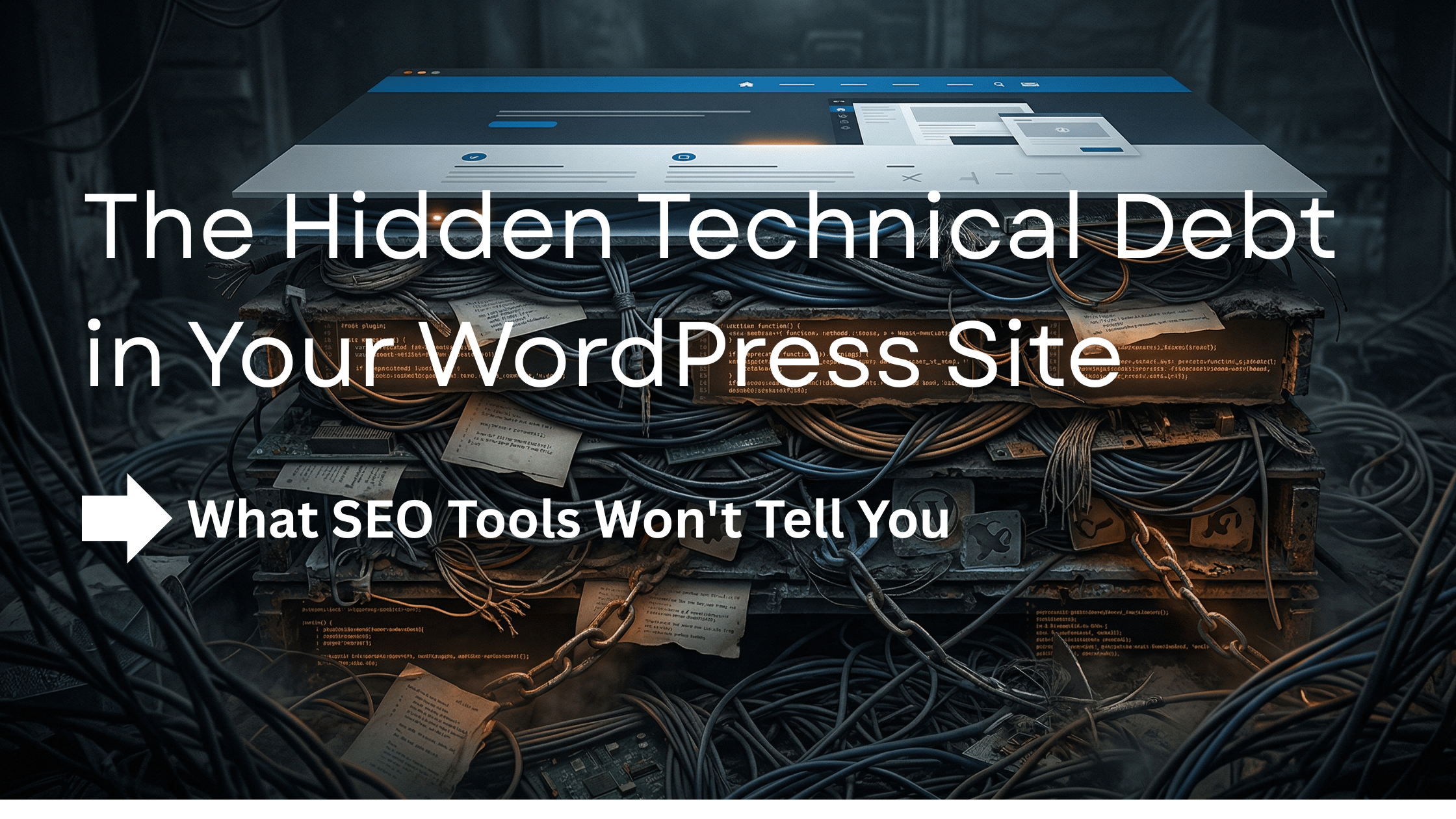
WordPress technical debt SEO
Hidden technical debt in WordPress refers to legacy server-level configurations — specifically in .htaccess, wp-config.php, and database tables — that remain long after plugins are deleted or migrations are completed. Unlike surface-level SEO issues, these "ghost" rules and crawl traps are invisible to tools like Screaming Frog and Ahrefs but
