
Gutenberg editor – 4 things to expect in WordPress 5.0 for website owners
November 27, 2018 0 commentsThe one BIG thing about WordPress 5.0 is the new Gutenberg Editor. It has been hyped a lot and maybe for a year? Well, the news is its release has been further delayed.
In the meantime let’s see what Gutenberg in WordPress 5.0 holds for the user.
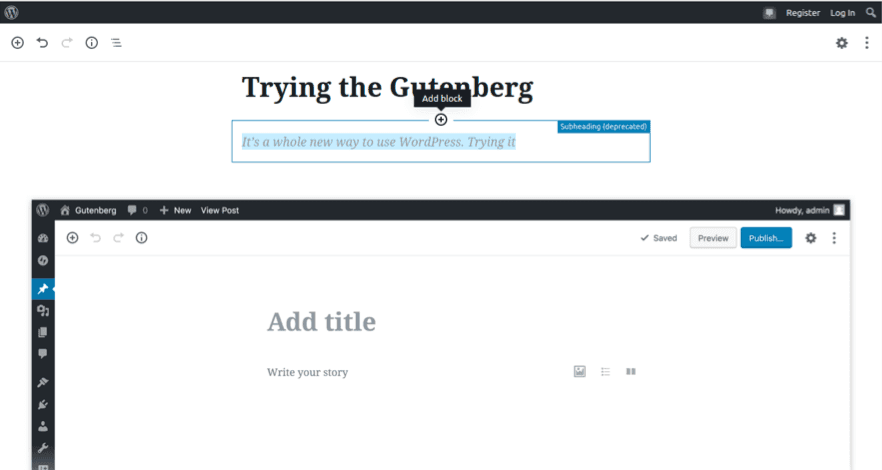
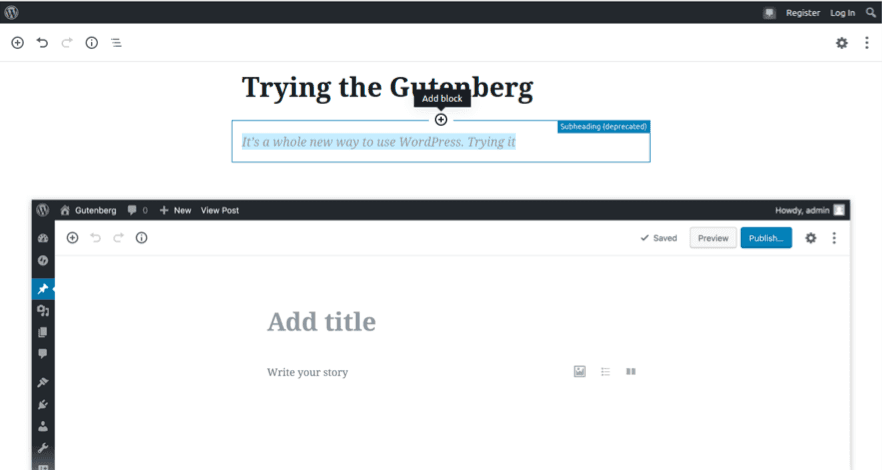
The first thing that you will notice is that it is a block-based editor. And this change is expected to give a “streamlined editing experience across your site” according to WordPress.
For those who are new to the concept of creating a page using blocks, it is one of the easiest and clutter-free way of build a page and a website. We choose the type of content that we want to put and then pick a block which can hold that.
For example, here is the block for text content which has the formatting options made available there itself. You can think of the classic editor, inside a block. Hope this helps.
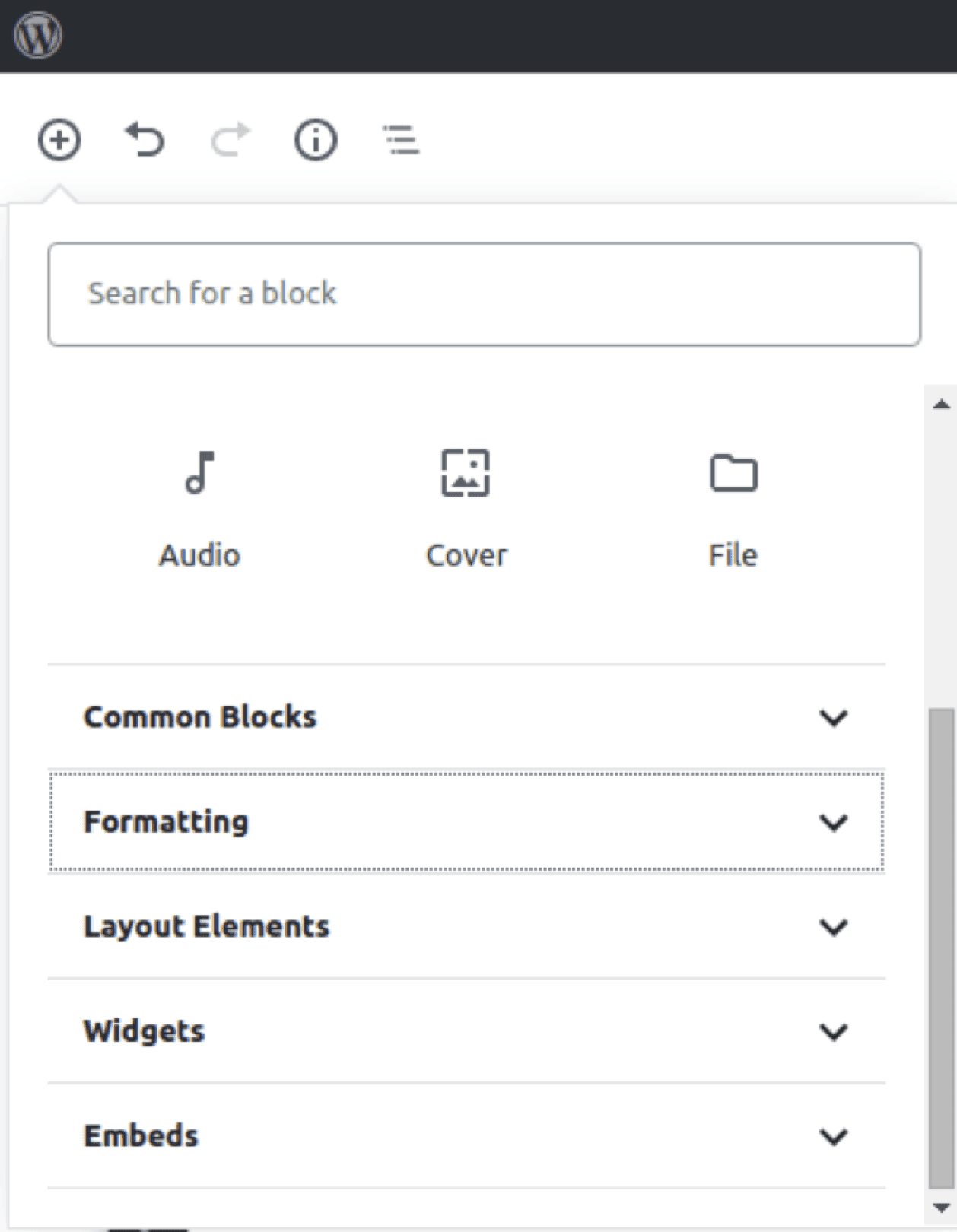
But then, what all types of blocks are available?
To begin with, there is a search bar and all the most used blocks are grouped at the top. To work on a simple blog, the blocks from the “Most Used” section and the next section, “Common Blocks” would be enough.

But for a bit more different and complex websites, a plethora of options are available beginning from “Formatting” to the option of “Embed”.
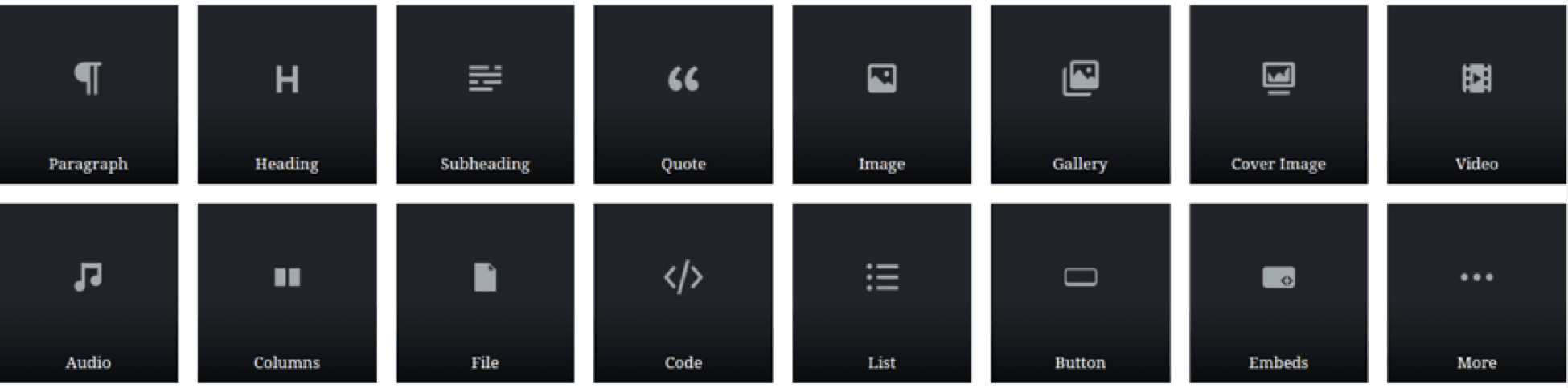
A website focusing on creating media-rich pages and posts will find it extremely useful with such blocks. Here are a few:
What I liked the most:
This is one thing that I, from an SEO conscious content writer, fell for – Content Insights:
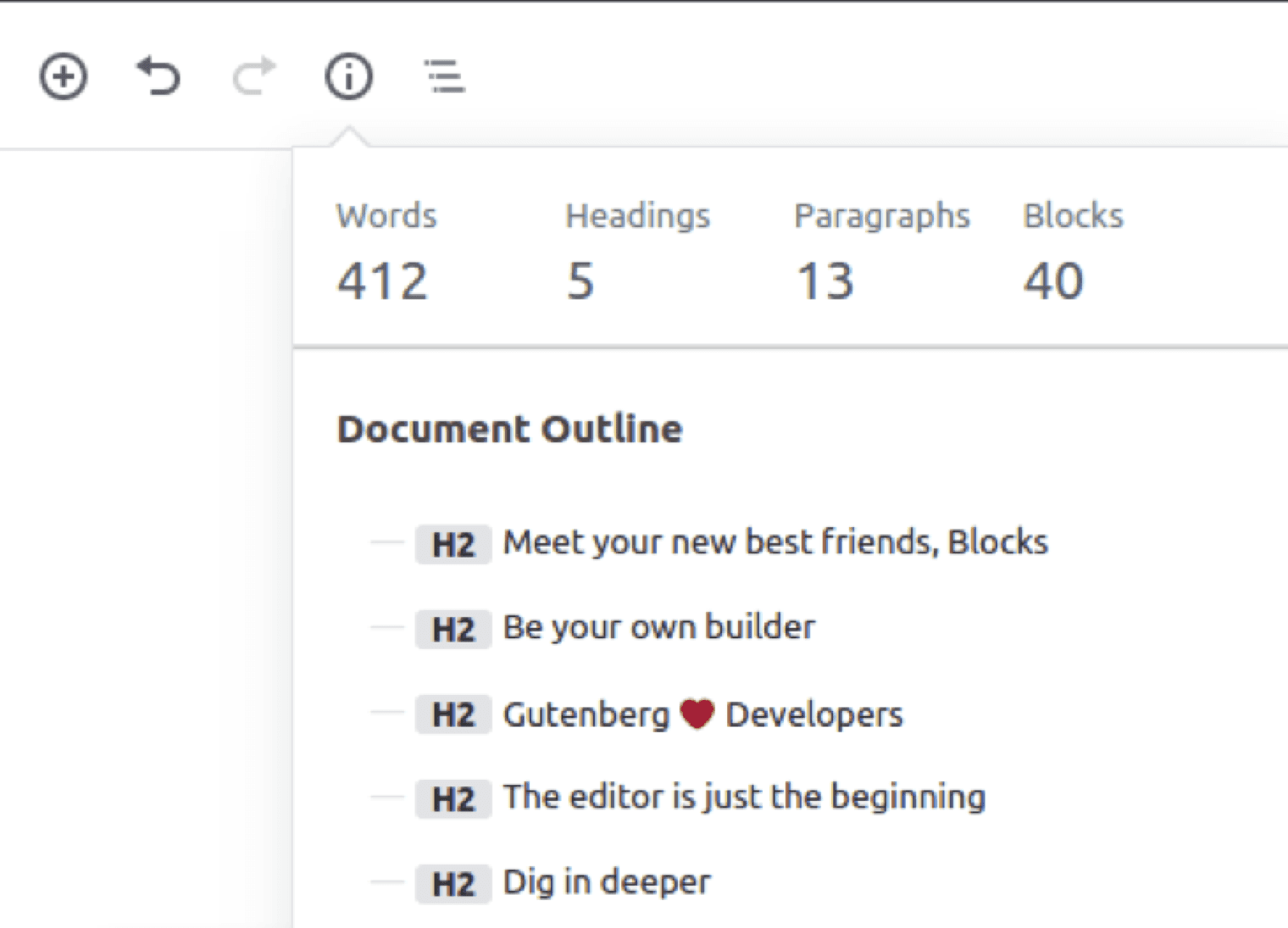
I’m not sure how many people realize the value of what is being provided. Writing a content is one thing. But, it is entirely another ball-game to do an SEO acceptable content, at least in terms of the Number of words and the Header tags, and that too the type, that are being used.
Technical Information:
For those who know a thing or two regarding technology, Gutenberg was made with WordPress REST API, JavaScript, and React as claimed in the WordPress site.
The Implications of Gutenberg:
- Gone are the days when you had to search for multiple plugins and page builders to design one page. You can do more with fewer plugins
- With appealing features, now content writers can focus on the one thing that they are good at – writing – without compromising on the appearance.
- Dependency on custom codes and coders have been brought to a new low. We remember the time when web developers used to charge per page! It’s a definite win for the content producers.
- The blocks have taken over a very good part of Website building from the hands of designers and coders, especially when what you built works across all screens and devices, smoothly!
Do you require help in implementing Guternberg on your WordPress website and try?
We at Macronimous can help you with our expert WordPress team support.
Feel free to inquire us today for a no-obligation WordPress CMS Consulting.
Related Posts
-
 December 9, 2009
PHP IDEs we use: Netbeans, and why?
Netbeans Integrated Development Environment (IDE) is an open source integrated development for software developers. You can run the Netbeans IDE on various platforms which include Linux, Windows, Solaris, and MacOs. It is aimed at providing a comfortable environment for the developer during each stage of development. This is accomplished by
Opensource, PHP Programming, web programming, Web tools2 comments -
December 16, 2008
Oxite … Opensource CMS in Microsoft way!
Last week there came a surprise from Microsoft, an Opensource CMS. While there are plenty of Opensource CMS applications available, we may not need another one in the line. However, I really appreciate this step from Microsoft. Microsoft named as Oxite, and ASP.NET Model-view-Controller based CMS. This bold open source attempt
